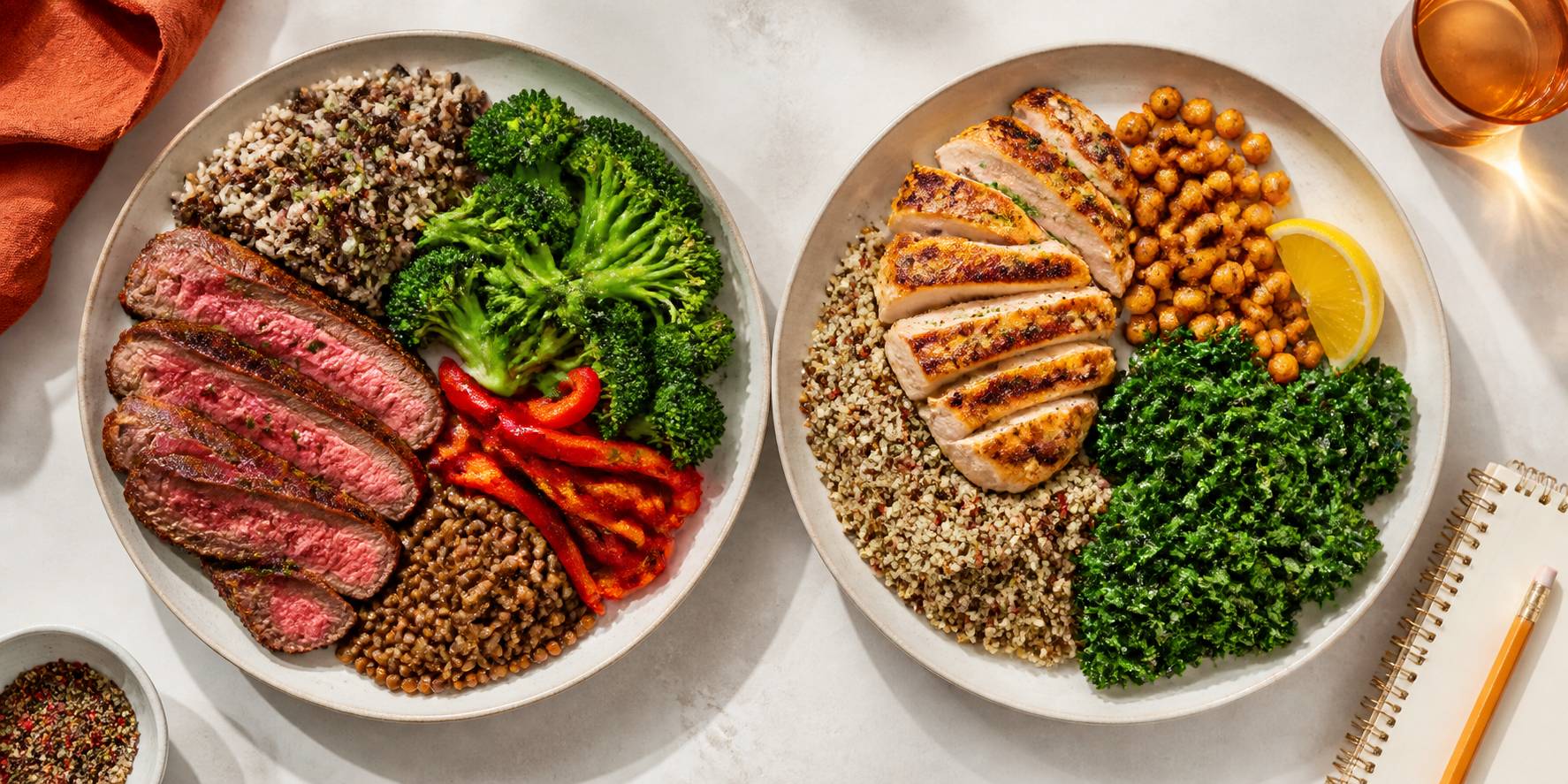
Protein grams are easy to compare until two meals have different calorie totals, serving sizes, and amounts of fiber. A 40-gram entrée can be a compact lunch or a much larger dinner. Ratios add context, but they should guide a decision rather than replace your appetite, training needs, or the ingredient list.
Protein density tells you how much protein a meal provides relative to calories. Fiber context tells you whether the rest of the plate includes legumes, vegetables, fruit, or whole grains. Neither measure is an official diet score. Both are practical shopping tools you can calculate from a Nutrition Facts label.
- Calculate protein density as protein grams divided by calories, multiplied by 100.
- Compare fiber separately instead of rewarding protein while ignoring plants.
- Use the serving listed on the label, not the package size you assume.
- A higher ratio is not always the better meal when energy needs differ.
How to calculate protein density
Take the protein grams in one serving, divide by calories in that serving, and multiply by 100. A 500-calorie meal with 40 grams of protein provides 8 grams per 100 calories. A 650-calorie meal with the same 40 grams provides about 6.2 grams per 100 calories.
The first meal is more protein-dense. The second may still be the smarter order for a large athlete who needs more energy, especially if those calories come from rice, potatoes, olive oil, avocado, or another useful part of the plate. Density describes concentration. It does not judge whether the calorie level fits your day.
Why fiber needs its own line
Animal proteins can lift the protein ratio without contributing fiber. That is why a second check matters. Read fiber grams on the label, then look at the ingredients. Beans, lentils, peas, whole grains, vegetables, fruit, nuts, and seeds should be visible in both places when the meal claims to be complete.
You can calculate fiber per 100 calories the same way, but a simple gram check is often easier. The FDA Daily Value for fiber is based on a 2,000-calorie reference diet, while personal calorie needs vary. Use the percent Daily Value to compare products, not as a rigid prescription for one meal.
Run the math on two bowls
Imagine Bowl A has 42 grams of protein, 620 calories, and 4 grams of fiber. Its protein density is about 6.8 grams per 100 calories. Bowl B has 34 grams of protein, 480 calories, and 9 grams of fiber. Its protein density is about 7.1, and it provides more than twice the fiber.
Bowl B looks stronger on both comparison measures. Bowl A can still fit a higher-energy day, and its ingredients may be more appealing. The calculation helps you ask a better follow-up: does the larger bowl offer useful energy and vegetables, or do most extra calories come from a sauce that adds little satisfaction?
Use a three-number scan when ordering
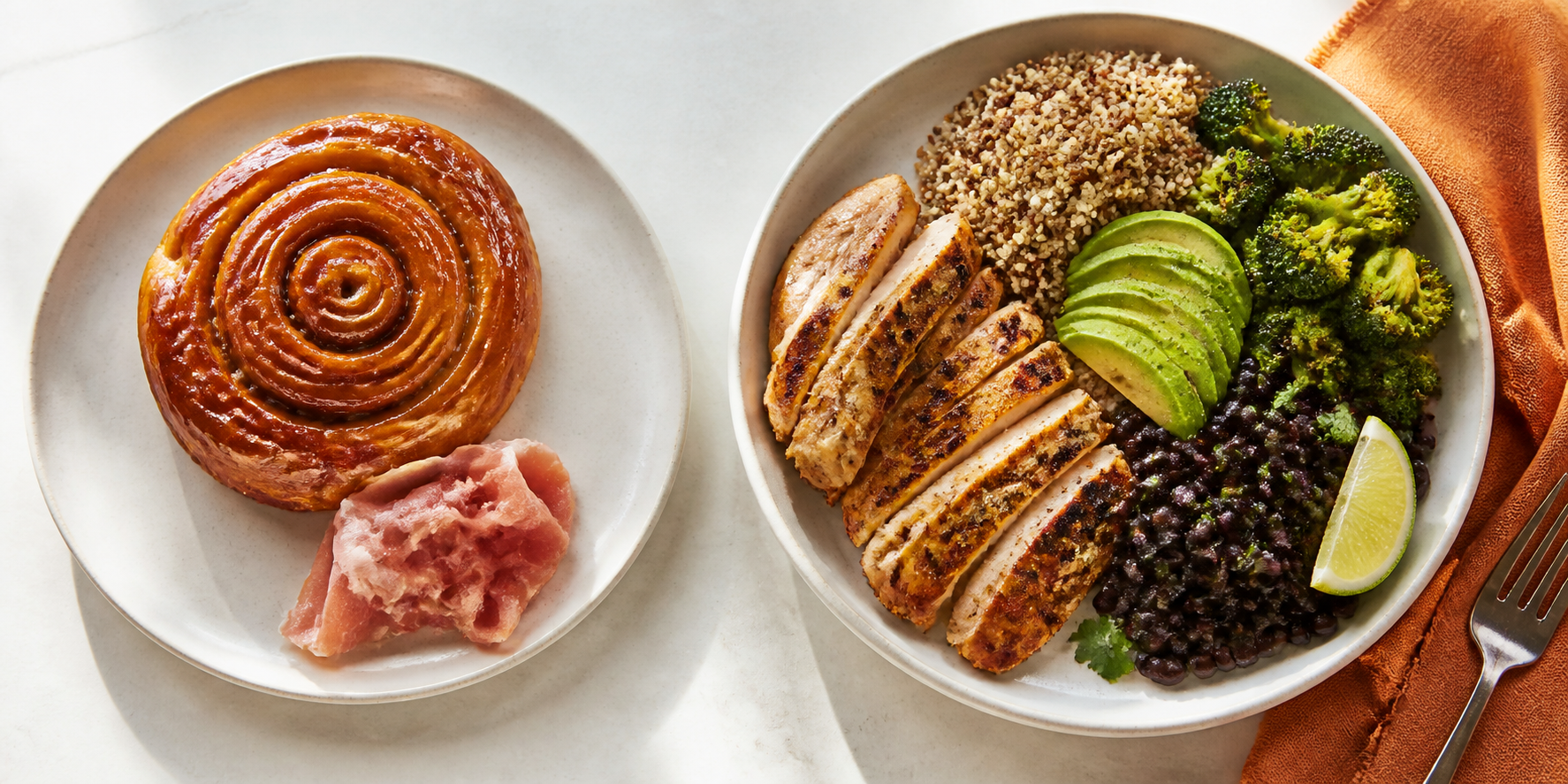
Start with protein grams, then scan calories and fiber. Those three numbers answer distinct questions: Is there a meaningful protein anchor? Does the portion fit the energy you want from this meal? Are fiber-rich plants present? Sodium and saturated fat deserve a separate check when they matter to your needs.
Serving size can change the whole comparison. Some packages contain more than one serving, while most single-serve prepared meals list the full tray. Restaurant nutrition may describe a standard build that differs from what arrives after substitutions. Compare the exact serving you plan to eat.
Avoid ratio traps
A near-zero-calorie protein supplement can post a strong ratio while providing no vegetables, texture, or full-meal experience. A salad can deliver excellent fiber while missing a serious protein source. A calorie-dense bowl with salmon, avocado, quinoa, and seeds may have a lower protein ratio yet make sense for an active person.
Ratios also say nothing about taste, allergens, price, preparation, or how well a meal reheats. Use them to narrow a menu, then apply the real-life questions. Would you enjoy this? Will it keep you satisfied? Does it fit the rest of your day? Can you afford to order it repeatedly?
Compare services with repeatable criteria
Prepared meals make ratio checks faster because the portion is fixed and nutrition is usually listed by dish. CookUnity’s menu breadth can produce many comparisons, while Factor’s filters can shorten the search. Meal kits require a little more care because nutrition may assume all supplied oil, sauce, or toppings are used.
Create a shortlist of meals you would order, then record protein, calories, fiber, final price, and preparation time. A service with ten appealing options in your range is more useful than one standout entrée surrounded by meals you would skip. Recheck saved dishes because recipes and nutrition can change.
Keep the calculation in a note on your phone or spreadsheet. Using the same fields each week prevents a bright protein badge from replacing a full comparison.
COMMERCIAL FAQ
Questions before you buy
01Where can I buy meals with a strong protein-to-calorie ratio?+
Start with prepared-meal services that publish calories and protein for every entrée, including CookUnity and Factor. Use their current menus to calculate grams per 100 calories. Compare several meals, since one service can have both strong and weak options.
02What is a good protein-to-calorie ratio for a meal?+
There is no universal official cutoff. A higher number means more protein concentration, but your energy needs still matter. Compare similar meals using the same formula, then consider fiber, ingredients, sodium, portion size, and how the meal fits your daily target.
03Which meal delivery service shows fiber before checkout?+
Many services include full nutrition details on individual recipe or meal pages, though access and format vary. Open the exact dish rather than relying on a category card. If fiber is missing, inspect ingredients for beans, lentils, whole grains, vegetables, fruit, nuts, and seeds.
04Should I choose the meal with the most protein?+
Choose the meal that fits your protein and energy range, not the largest number by default. A 50-gram entrée may be useful after hard training. A smaller meal with 35 grams and more fiber may fit another day better. Serving size and total calories provide context.
05Can I compare restaurant meals with prepared meals using this ratio?+
Yes, when both provide protein and calorie values for a comparable serving. Chain restaurants covered by federal menu-labeling rules must provide calories and make additional written nutrition information available on request. Independent restaurants may not have tested values, so estimates are less reliable.
Sources
The Protein Meal Lab uses primary and authoritative sources. Service menus, prices, recipes, and delivery areas can change.