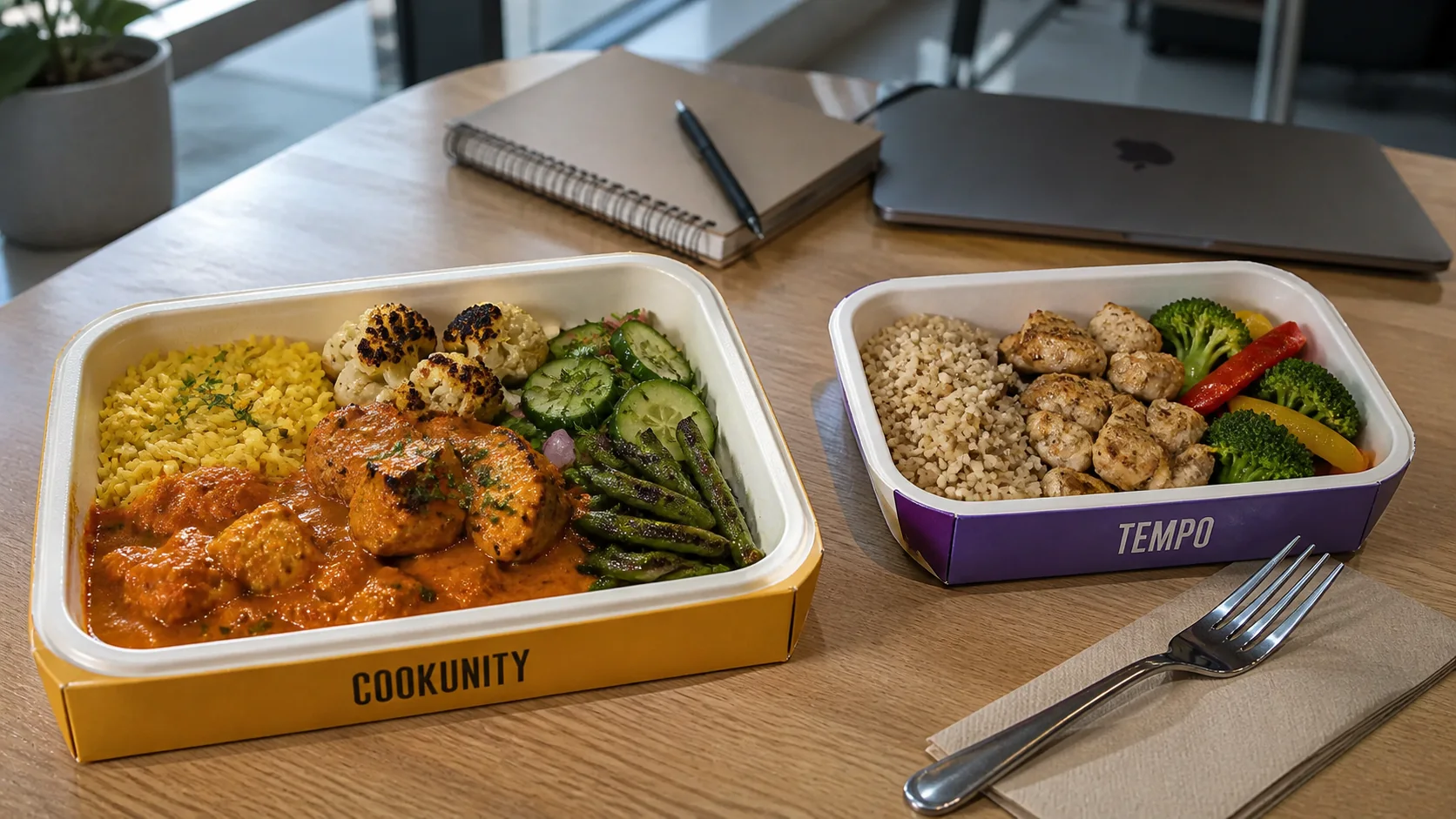
CookUnity and Tempo Meals both deliver fresh, fully cooked, single-serving food for quick reheating. Tempo, part of the Home Chef family, builds its identity around a simple nutritional rule: meals contain at least 30 grams of protein, stay below 600 calories, and use whole grains where possible. CookUnity takes the opposite approach. It offers a much larger chef marketplace and asks the buyer to choose the nutrition profile meal by meal.
CookUnity is the better overall service for shoppers who want many cuisines and enough variety to keep ordering for months. Tempo is the better specialist for someone who wants every entrée to clear a predictable protein and calorie threshold without studying hundreds of labels. Both are convenient. The decision is between broad choice and a narrower, easier system.
- CookUnity wins for named chefs, cuisine breadth, and a larger rotating prepared-meal marketplace.
- Tempo wins for a standardized 30-plus-gram protein and under-600-calorie promise.
- Both sell fresh single-serving meals that can heat in as little as about two minutes.
- Check fiber, sodium, ingredients, and delivered price even when a meal meets the headline protein target.
The short verdict
Choose CookUnity if you want your weekly order to move from Chicken Tikka Masala to steak, seafood, salads, pasta, tacos, and regional specialties. The service currently advertises up to 400-plus meals from 100 professional chefs, with plans from 4 to 16 meals per week. Exact choices depend on the delivery area.
Choose Tempo if a simple rule reduces decision fatigue. Home Chef says Tempo meals provide 30-plus grams of protein, fewer than 600 calories, and whole grains where possible. The meals are fresh, single serving, and ready in as little as two minutes. That is a clear brief for a fast work lunch or post-training dinner.
Menu strategy and variety
CookUnity is built for exploration. Named chefs, rotating dishes, and many cuisine types create meaningful differences between meals. A shopper can build a week around distinct proteins, sauces, grains, and vegetables instead of receiving variations on one high-protein formula. That breadth is valuable for people who stop using prepared services when the menu becomes predictable.
Tempo intentionally narrows the field. Every entrée fits the core protein and calorie positioning, so a customer can focus on flavor and dietary preference rather than verifying the same threshold repeatedly. Home Chef notes that an account can switch between Tempo and Home Chef plans, but only one menu can be ordered in a given weekly order. Tempo is simpler, while CookUnity is broader.
Food quality and the eating experience
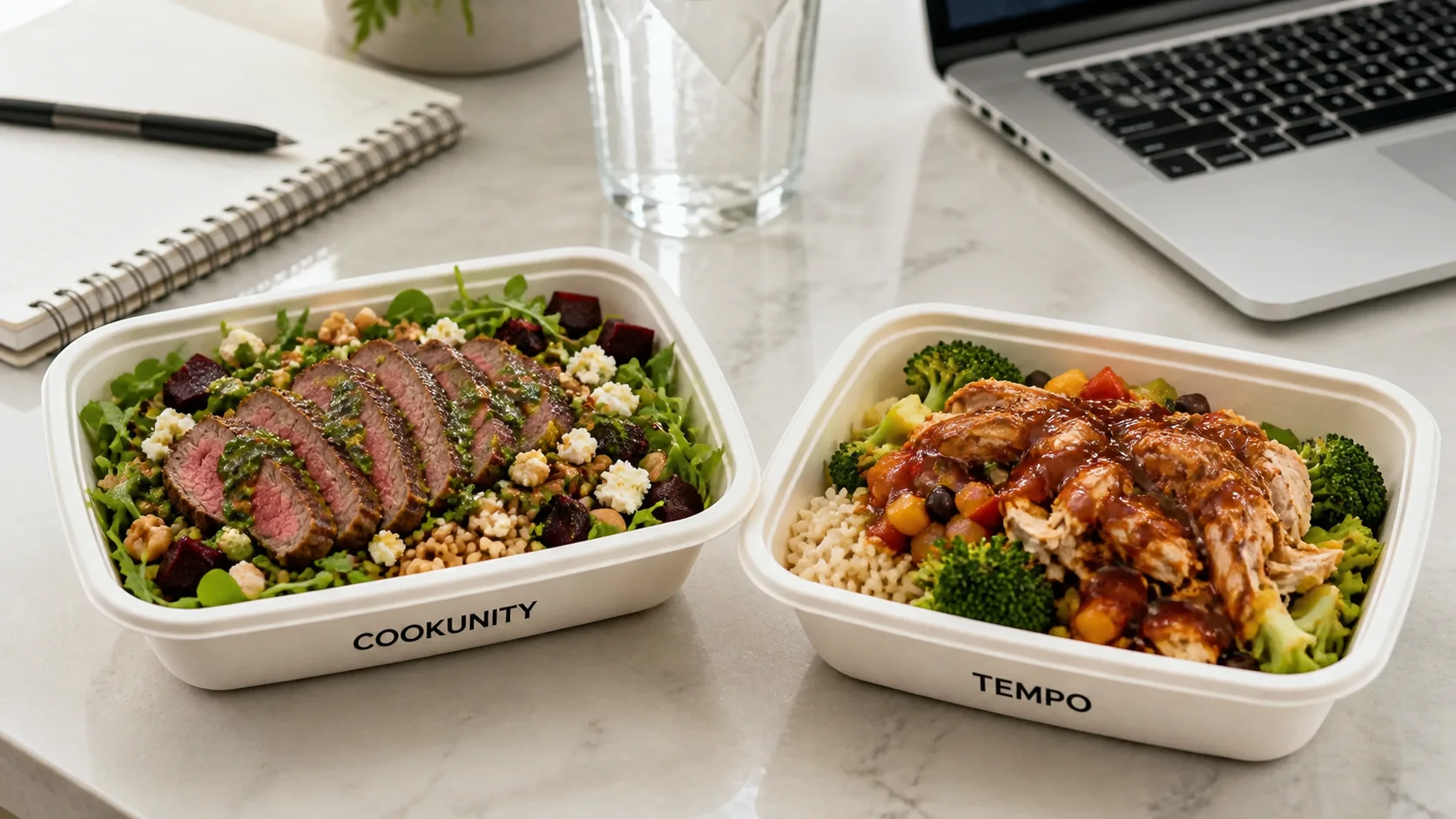
CookUnity's advantage is culinary identity. A Chicken Tikka Masala can include turmeric rice, charred cauliflower, green beans, and a fresh cucumber salad, giving the meal contrast beyond the protein. The best dishes feel composed by a chef rather than assembled to meet one numerical standard. Quality still varies across a large marketplace, so ratings and ingredient lists matter.
Tempo emphasizes dependable, familiar meals such as garlic chicken with brown rice and vegetables. That makes the service approachable and easy to repeat, but the narrower nutritional brief can limit richness or cuisine range. For both brands, follow the preferred heating instructions and protect fresh garnishes from the microwave. Fast food should still have texture.
Protein is only part of the label
Tempo's minimum of 30 grams makes protein shopping unusually direct. The under-600-calorie ceiling can also help shoppers who need a consistent lunch size. Those two numbers do not describe the entire meal. Fiber, sodium, saturated fat, allergens, vegetable quantity, and overall ingredient quality remain relevant.
CookUnity requires more comparison because nutrition differs by recipe. That flexibility can be an advantage for larger appetites, athletes with higher energy needs, or people who want some lighter meals and some more substantial dinners. Build a cart by sorting for protein, then confirm a fiber-rich component such as beans, whole grains, vegetables, or legumes. We do not want protein goals to erase the rest of the plate.
Plans, pricing, and weekly control
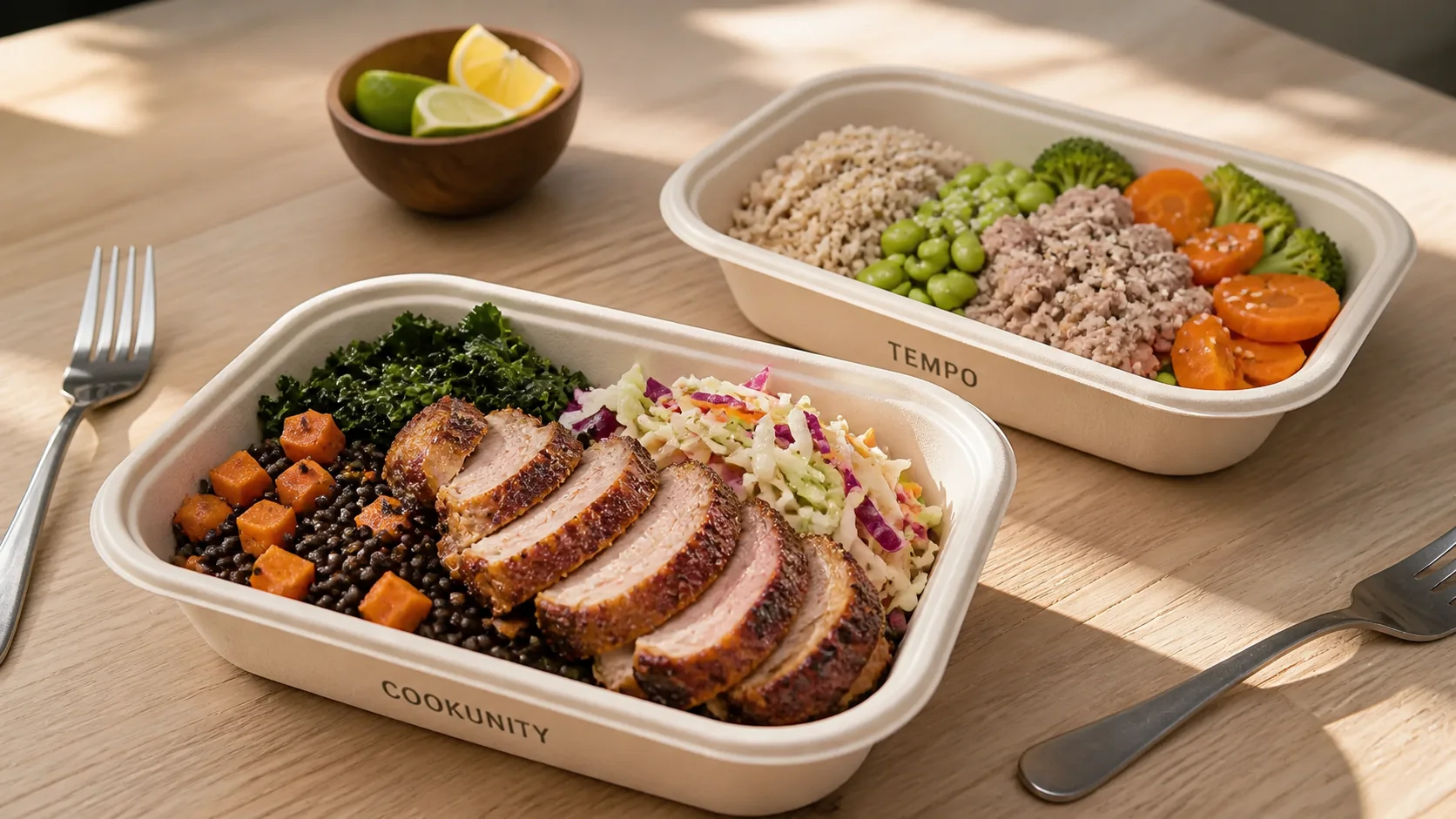
Both services operate as weekly subscriptions, and both support individual portions. Tempo plans are available across several meal counts, while CookUnity currently offers 4, 6, 8, 12, or 16 meals. Final cost depends on quantity, location, shipping, and current promotions. Menu availability can also change from one delivery area to another.
Compare recurring prices after any introductory offer expires. Then price the entire usable meal, including sides you may need to add. A lower-calorie Tempo meal might need fruit or yogurt for a larger appetite. A richer CookUnity entrée may already feel complete. The delivered price per satisfying meal is more useful than the advertised starting price.
Who should buy each service
CookUnity is best for buyers who treat prepared meal delivery as a long-term replacement for takeout and need enough variety to remain interested. It also suits households with different tastes because every person can choose an individual chef-made dish. Buyers should be comfortable reading nutrition dish by dish.
Tempo is best for shoppers who want a repeatable protein and calorie rule, fast microwave preparation, and a smaller decision set. It can be particularly convenient for office lunches and goal-oriented routines. Final verdict: CookUnity wins overall for food choice and culinary range. Tempo wins for standardized high-protein simplicity.
COMMERCIAL FAQ
Questions before you buy
01Is CookUnity better than Tempo Meals?+
CookUnity is better for named chefs, global cuisines, and a much broader prepared-meal selection. Tempo is better for a simple nutrition rule because its meals are positioned with at least 30 grams of protein and fewer than 600 calories.
02Which is better for high-protein meals, CookUnity or Tempo?+
Tempo makes the choice easier because every meal follows its stated 30-plus-gram protein standard. CookUnity has many high-protein options but requires checking each nutrition panel. CookUnity offers more cuisine variety and can include meals above or below Tempo's calorie range.
03Where can I buy Tempo Meals?+
Tempo is ordered through the official Tempo or Home Chef service where available. Enter your ZIP code to confirm delivery, current recipes, plan sizes, recurring price, and order cutoff. Home Chef says customers can switch plans, but only one menu can be used per weekly order.
04Are CookUnity and Tempo meals already cooked?+
Yes. Both deliver fresh, fully cooked, single-serving meals designed for quick reheating. Tempo says meals can be ready in as little as two minutes. CookUnity provides chef-specific heating instructions, and some dishes may benefit from an oven or skillet.
05Which service is better for fiber?+
Neither brand should be chosen on the service name alone. Tempo uses whole grains where possible, while CookUnity offers meals with vegetables, legumes, and grains across a larger menu. Check the fiber grams and ingredients for each tray and add produce or beans when needed.
Sources
The Protein Meal Lab uses primary and authoritative sources. Service menus, prices, recipes, and delivery areas can change.