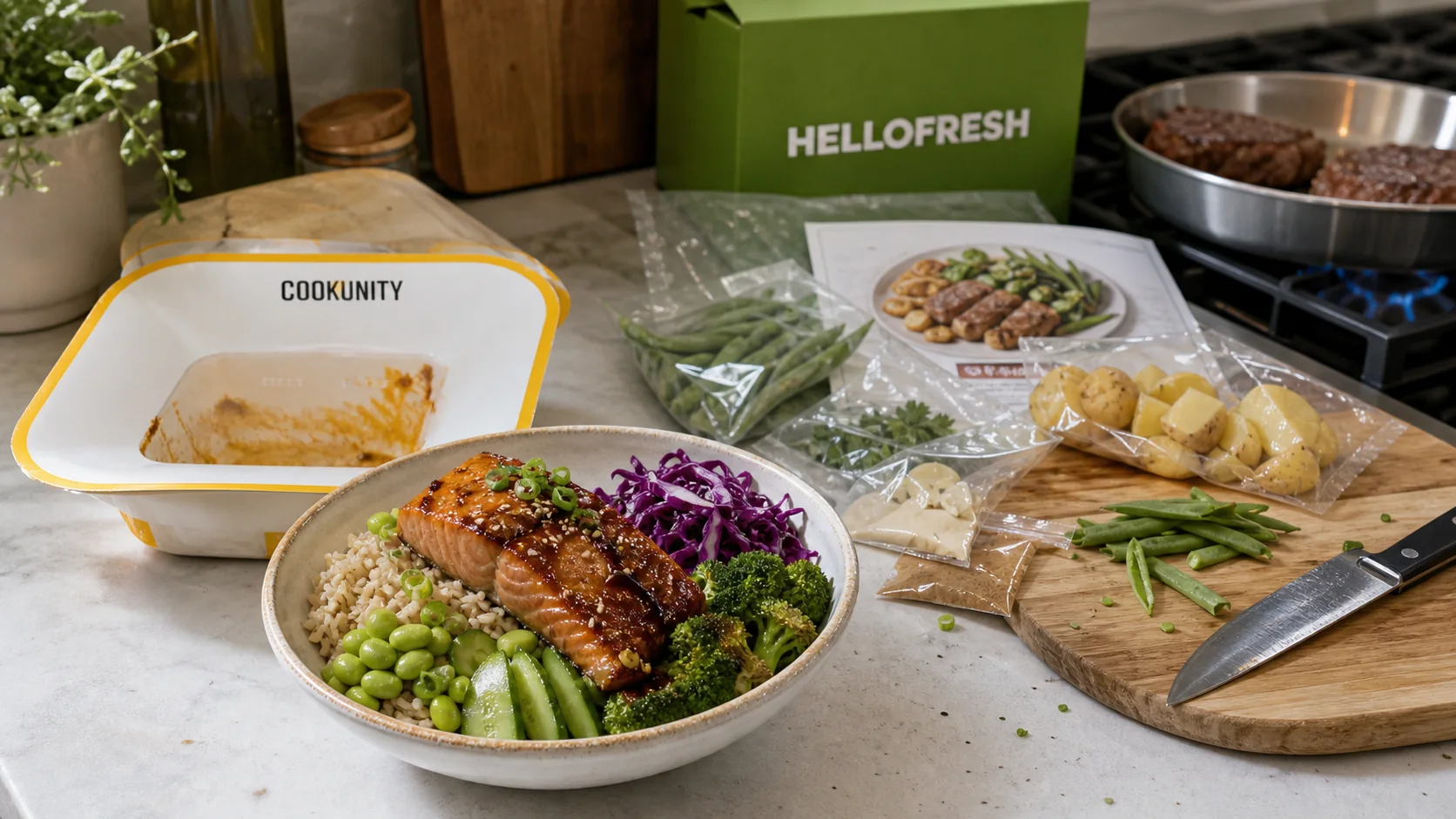
CookUnity and HelloFresh are often compared as meal-delivery services, but they sell different experiences. CookUnity sends fully cooked, single-serving meals from named chefs. HelloFresh sends pre-portioned ingredients and recipes that the customer cooks at home. One replaces takeout with reheating. The other replaces grocery planning while preserving the act of cooking.
CookUnity is the stronger overall choice for a person who wants dinner ready quickly and does not want chopping, pans, or cleanup. HelloFresh is better for couples and families who enjoy cooking, want multi-serving recipes, and care about controlling meat doneness, sauce quantity, and seasoning. The right answer starts with how much kitchen work you actually want on a busy night.
- CookUnity wins for zero-prep speed, single servings, and chef-made cuisine variety.
- HelloFresh wins for hands-on cooking, portion customization, and shared multi-serving dinners.
- CookUnity advertises up to 400-plus meals, while HelloFresh lists 100-plus weekly menu and market items.
- Compare the recurring delivered cost and your real cooking time, not only the first-box promotion.
The short verdict
Choose CookUnity when the service needs to cover work lunches, late dinners, or individual household preferences with almost no friction. Meals arrive chilled and fully cooked, and plans currently run from 4 to 16 meals per week. A Miso-Glazed Salmon bowl can move from refrigerator to table without requiring the customer to portion fish, cook rice, or wash a skillet.
Choose HelloFresh when cooking is part of the value. Its U.S. site advertises 100-plus weekly menu and market items and more than 21 ways to swap, upgrade, or add proteins and sides. The box reduces planning and measuring, but the customer still follows the recipe, cooks the ingredients, and cleans the kitchen.
Prepared meals and meal kits are different products
For meal delivery built around individual portions, CookUnity's unit is one finished meal for one person. This supports solo diners, different schedules, and households where one person wants salmon while another wants steak or curry. The package includes heating guidance, nutrition, ingredients, and a use-by date. The tradeoff is less control over how the components were originally cooked.
HelloFresh's unit is a recipe with measured ingredients, commonly designed for more than one serving. That creates flexibility while cooking. You can pull a steak sooner, hold sauce on one portion, use less oil, or roast vegetables longer. The tradeoff is active time. A recipe labeled quick still asks for attention that a fully prepared meal does not.
Food quality and taste control
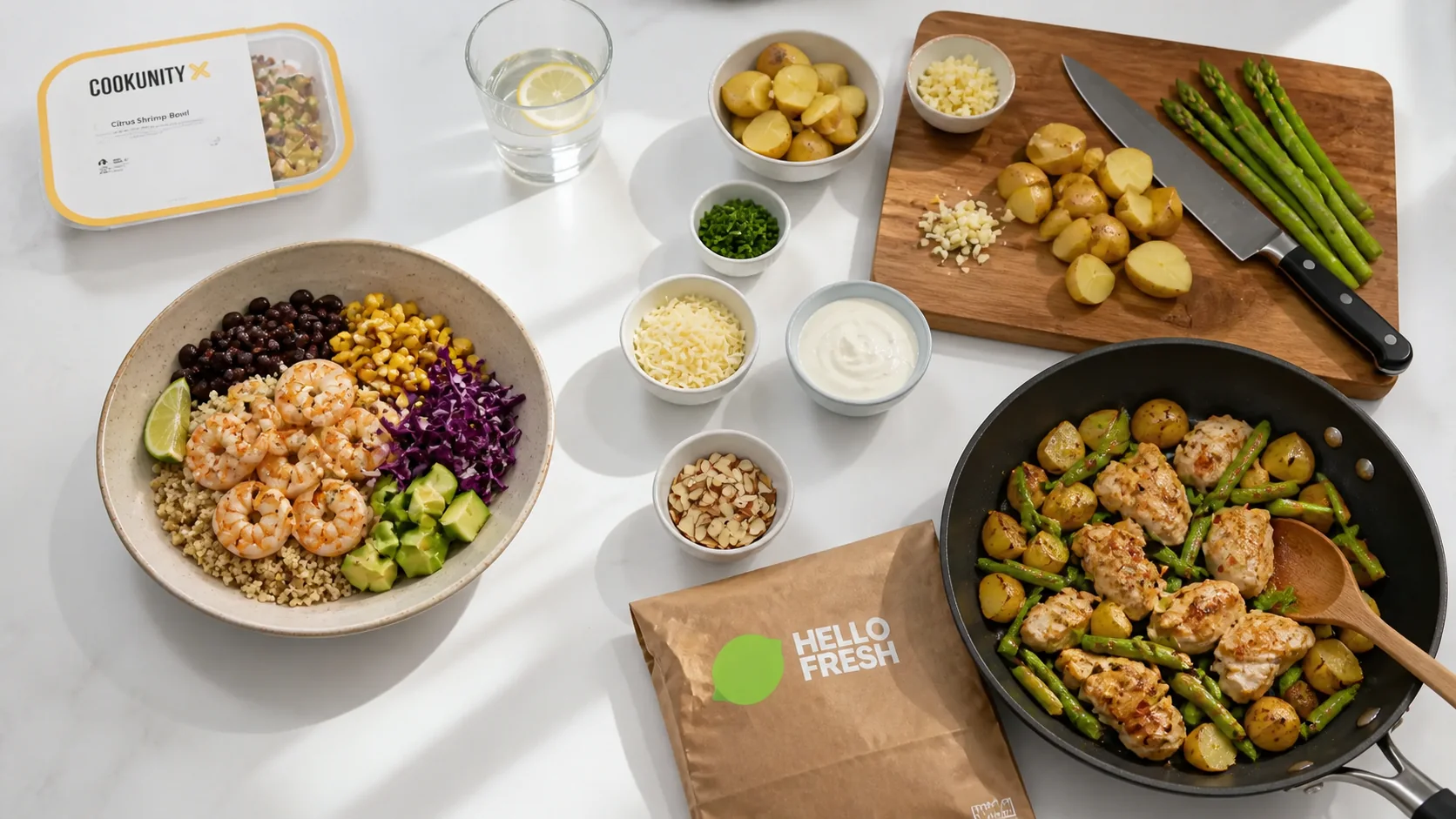
CookUnity has the advantage when variety and chef identity matter. Its marketplace includes dishes associated with professional chefs across many cuisines, so a customer can alternate among grain bowls, seafood, regional comfort food, and global flavors. Good reheating technique matters. Cold garnishes should stay cold, and an oven can protect the texture of fish or vegetables better than an aggressive microwave cycle.
HelloFresh has the advantage when the customer wants the freshest possible just-cooked texture. Steak can be cooked to the preferred doneness, chicken can rest before slicing, and vegetables can retain more bite. The result depends on cooking skill and available time. A well-executed kit can beat reheated food on texture, but it cannot beat CookUnity on speed.
Protein, fiber, and portion control
Both services publish recipe or meal information, but the shopping workflow differs. CookUnity lets buyers read the nutrition panel for a finished serving before adding it to the cart. That makes protein, calories, fiber, and sodium straightforward to compare, though the values vary widely across the chef marketplace.
HelloFresh gives the cook more ability to adjust the final plate. You can serve more vegetables, reduce a sauce, divide a starch differently, or add beans to a recipe. Those changes also make the final nutrition less identical to the published recipe. In either service, keep a visible fiber source on the plate. Salmon or steak provides protein, while vegetables, legumes, and whole grains complete the meal.
Price and the value of time
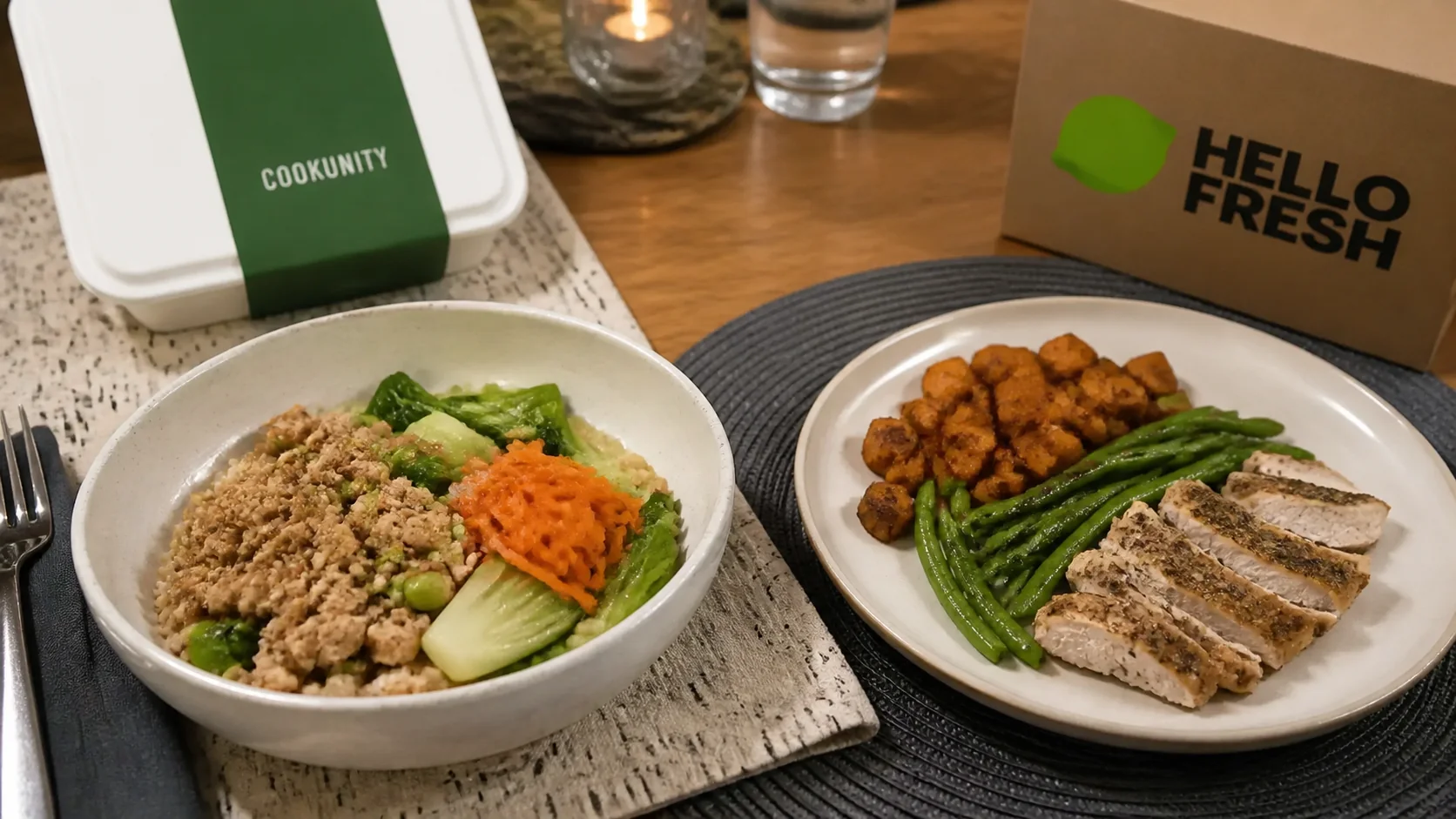
A fair price comparison includes shipping, plan minimums, add-ons, and the number of servings actually eaten. CookUnity can cost more than cooking from raw ingredients, but it may compare favorably with restaurant delivery once service fees, tips, and wasted groceries are counted. HelloFresh bundles measured ingredients and instructions, yet the customer's cooking and cleanup remain part of the cost.
Create a one-week trial on paper before ordering. For CookUnity, choose four individual meals you would buy at full recurring price. For HelloFresh, choose recipes that fit the household serving count and calendar. Assign realistic cooking and cleanup time to each kit. The cheaper invoice is not always the lower-friction week.
Who should buy each service
CookUnity is best for one-person households, busy professionals, couples with different tastes, and anyone replacing takeout. It is also easier when meal timing is unpredictable because each serving can be heated independently. Its large chef marketplace offers more ways to avoid boredom without learning a new recipe every night.
HelloFresh is best for couples or families who view cooking as useful time together and want greater control over the final dish. It can also teach techniques and reduce unused grocery ingredients. Final verdict: CookUnity wins for convenient prepared food. HelloFresh wins for the experience and control of cooking.
COMMERCIAL FAQ
Questions before you buy
01Is CookUnity better than HelloFresh?+
CookUnity is better for fully cooked single-serving meals, fast reheating, and minimal cleanup. HelloFresh is better for customers who want to cook, customize seasoning and doneness, and share multi-serving recipes. They solve different parts of meal planning.
02Is CookUnity or HelloFresh better for one person?+
CookUnity is usually easier for one person because every meal is individually portioned and fully cooked. HelloFresh can work for solo diners who enjoy leftovers, but many recipes produce multiple servings and require preparation and cleanup.
03Where can I buy CookUnity or HelloFresh?+
Order through each company's official website or app after entering your ZIP code. Review the local menu, minimum order, shipping, recurring price, cutoff date, and skip options. Menus and delivery coverage can change by location and week.
04Which service has more menu variety?+
CookUnity advertises up to 400-plus meals from 100 professional chefs. HelloFresh advertises 100-plus weekly menu and market items plus swaps and upgrades. The counts include different item types, but CookUnity offers the broader selection of fully prepared dishes.
05Which is better for high-protein meals?+
Both can support a high-protein cart. CookUnity makes the finished serving and nutrition panel easy to compare. HelloFresh lets you choose or add protein and control the portion while cooking. In both cases, review fiber, calories, sodium, and vegetables with the protein total.
Sources
The Protein Meal Lab uses primary and authoritative sources. Service menus, prices, recipes, and delivery areas can change.