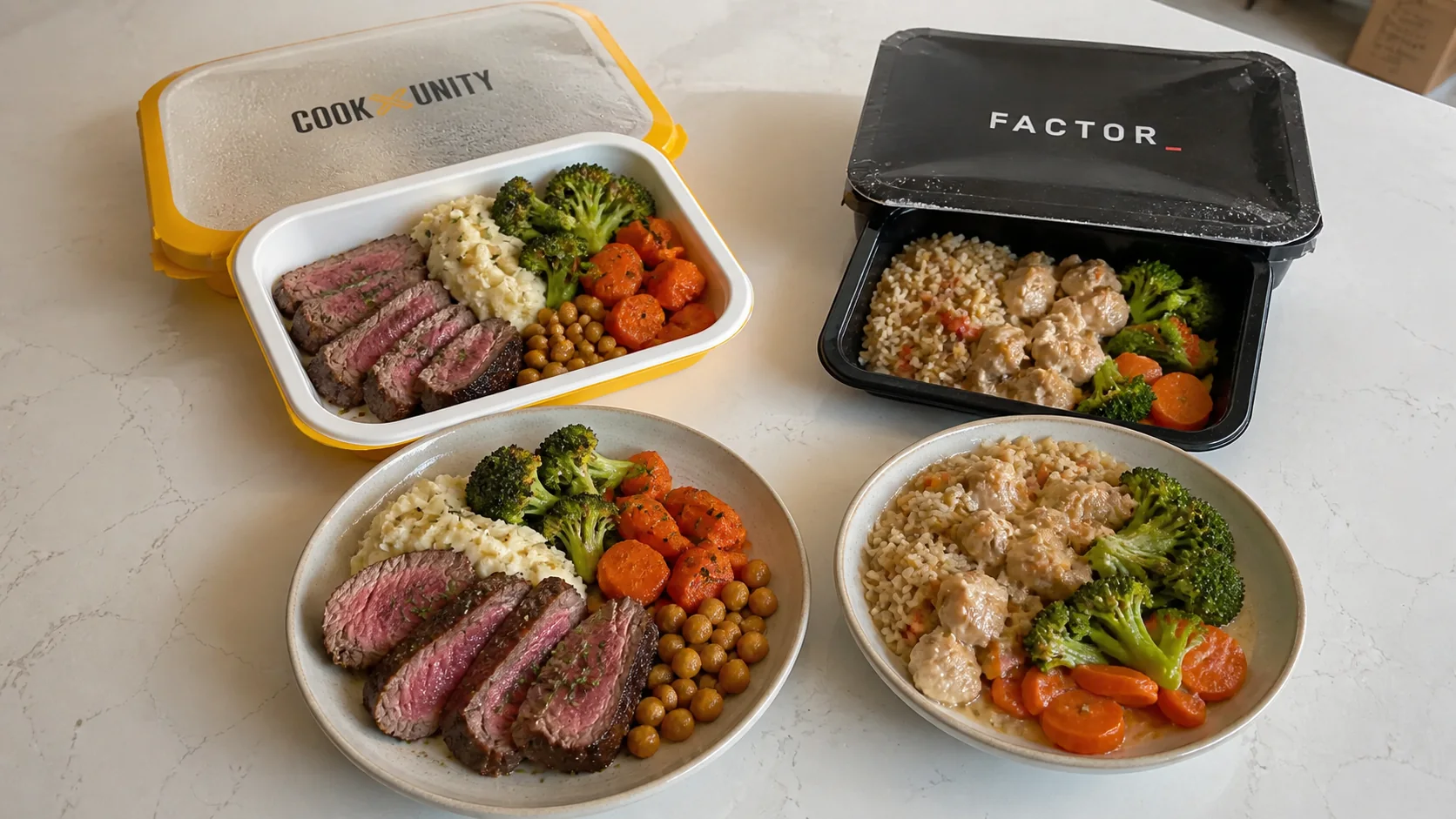
CookUnity and Factor solve the same weeknight problem: both deliver fresh, single-serving meals that arrive fully cooked and can be heated in about two minutes. The important difference is how each service organizes the experience. CookUnity behaves like a large chef marketplace, with named culinary talent and a broad range of cuisines. Factor behaves like a nutrition-led prepared meal system, with dietitian-designed categories that make goal-based filtering quick.
For most taste-first shoppers, CookUnity is the better overall service. Its official site advertises up to 400-plus meals and 100 professional chefs, compared with Factor's 100-plus meals and add-ons. Factor can still be the smarter purchase when a buyer wants a defined filter such as High Protein, Calorie Smart, Keto, Fiber Filled, Sodium Smart, or GLP-1 Balance. The winner depends on whether you want to explore food or simplify nutrition decisions.
- CookUnity wins overall for menu breadth, chef identity, and cuisine variety.
- Factor wins for dietitian-designed filters and a more standardized macro-shopping experience.
- Both services deliver chilled, fully cooked, single-serving meals that reheat quickly.
- Nutrition still varies by dish, so compare protein, fiber, calories, sodium, and serving size before checkout.
The short verdict
Among prepared meal delivery services, choose CookUnity if your main goal is to replace takeout with meals that feel selected from different restaurants. Its larger marketplace lets shoppers move among steak, seafood, curries, tacos, grain bowls, pasta, and regional specialties without changing services. Plans currently range from 4 to 16 meals per week, and the available menu changes by ZIP code and delivery week.
Choose Factor if your first action is selecting a nutrition filter. Factor's current menu groups meals into clearly named programs and publishes detailed nutrition for each recipe. A current Creamy Lemon Pepper Chicken, for example, lists 42 grams of protein, 5 grams of fiber, 560 calories, and 620 milligrams of sodium. That makes a measurable goal easier to shop.
Menu variety and chef identity
CookUnity's strongest advantage is not simply a larger number. The service attaches meals to identifiable chefs, which gives dishes a point of view and helps customers understand why a curry, steak, or noodle bowl tastes different from another option. The breadth also reduces the risk that a prepared meal plan begins to feel repetitive after several weeks.
Factor offers fewer total choices but a more controlled decision tree. Shoppers can move directly into a high-protein, calorie-conscious, keto, plant-based, fiber-focused, or sodium-aware collection. Factor's 100-plus figure includes meals and add-ons, so it should not be compared with CookUnity's menu count as if every item were an equivalent dinner. Even with that caveat, CookUnity provides the deeper culinary catalog.
Taste, texture, and reheating
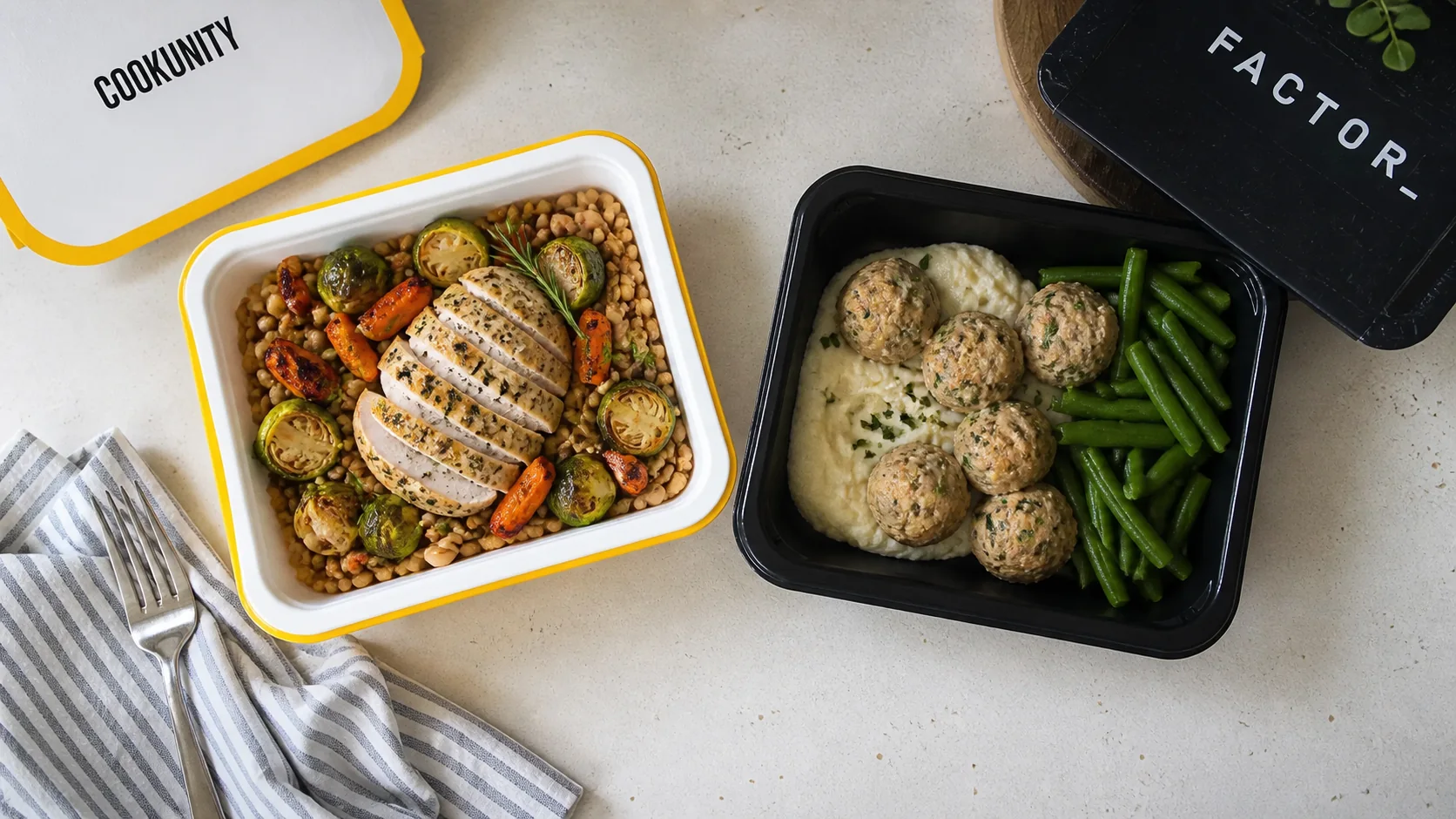
CookUnity wins when the desired experience is chef-driven and restaurant-inspired. A meal such as Grilled Herb Steak can pair a clear protein center with potatoes, roasted vegetables, and a legume or grain. Sauces and garnishes are often packaged or instructed in ways that preserve contrast. Results still depend on the individual dish and heating method, so an oven or skillet may outperform a microwave for meat and crisp vegetables.
Factor is designed around dependable reheating and familiar comfort-food formats. Creamy chicken, bowls, and composed entrées tend to travel well, but some shoppers may find the menu less adventurous. For either service, read the chef instructions, remove cold garnishes before heating, and check the use-by date. A prepared meal should look and taste like a complete lunch or dinner, not merely hit a protein number.
Protein, fiber, and nutrition filters
Factor has the clearer nutrition-navigation advantage. Its category names tell the shopper what problem each set of meals is intended to solve, and individual recipe pages show useful macro details. This can shorten the time required to assemble a week of meals that meets a consistent calorie or protein brief.
CookUnity gives buyers more freedom but requires more reading. Protein can be high in steak, chicken, seafood, and legume-forward dishes, yet no single threshold applies to the whole marketplace. Check fiber as carefully as protein. A high-protein tray with few vegetables or legumes may need fruit, beans, or a side salad. Neither brand should receive a health halo without examining the exact dish.
Price, plans, and flexibility
Both companies use weekly plans, and final cost depends on meal count, ZIP code, shipping, and current promotions. CookUnity says customers can select 4, 6, 8, 12, or 16 meals and can skip or pause. Factor also lets subscribers choose a weekly meal quantity and manage upcoming orders. Introductory discounts can make the first box look unusually inexpensive, so compare the recurring delivered price instead.
Build the same four-meal test cart at both services. Include one poultry dish, one beef or seafood dish, one plant-forward option, and one meal you would genuinely reorder. Record the delivered cost, protein, fiber, calories, sodium, heating method, and use-by date. This produces a fairer comparison than relying on a single advertised starting price.
Who should buy each service
CookUnity is best for busy professionals, solo diners, couples with different tastes, and anyone who values cuisine range more than one standardized diet program. It is especially strong for people replacing restaurant delivery because the named-chef model creates more variety without adding cooking or cleanup.
Factor is best for shoppers who want a shorter path from goal to cart. Its dietitian-designed categories and detailed labels support structured calorie, protein, keto, fiber, or sodium shopping. Final verdict: CookUnity wins the overall comparison for food choice and long-term menu interest. Factor wins the specialist category for nutrition-led filtering.
COMMERCIAL FAQ
Questions before you buy
01Is CookUnity better than Factor?+
CookUnity is better for shoppers who want a larger chef marketplace, more cuisines, and less menu repetition. Factor is better for shoppers who want dietitian-designed categories and quick filters such as High Protein, Calorie Smart, Keto, Fiber Filled, or Sodium Smart.
02Which is better for high-protein meals, CookUnity or Factor?+
Factor makes high-protein shopping faster through a dedicated filter and detailed recipe nutrition. CookUnity can offer many high-protein choices, but protein varies by meal and must be checked individually. Compare fiber, calories, sodium, and portion size alongside protein.
03Where can I buy CookUnity or Factor meals?+
Order CookUnity from CookUnity's website or app and Factor from Factor's website after confirming delivery to your ZIP code. Both use weekly plans. Review the current menu, recurring delivered price, cutoff date, and skip controls before subscribing.
04Are CookUnity and Factor meals already cooked?+
Yes. Both services deliver chilled, fully cooked, single-serving meals designed for quick reheating. Follow the package instructions and use-by date. An oven or skillet may improve the texture of some meats and vegetables compared with microwave-only heating.
05Which service has more meal variety?+
CookUnity advertises up to 400-plus meals from 100 professional chefs, while Factor advertises 100-plus meals and add-ons. Counts vary by week and location and do not measure identical item types, but CookUnity presents the broader chef and cuisine selection.
Sources
The Protein Meal Lab uses primary and authoritative sources. Service menus, prices, recipes, and delivery areas can change.