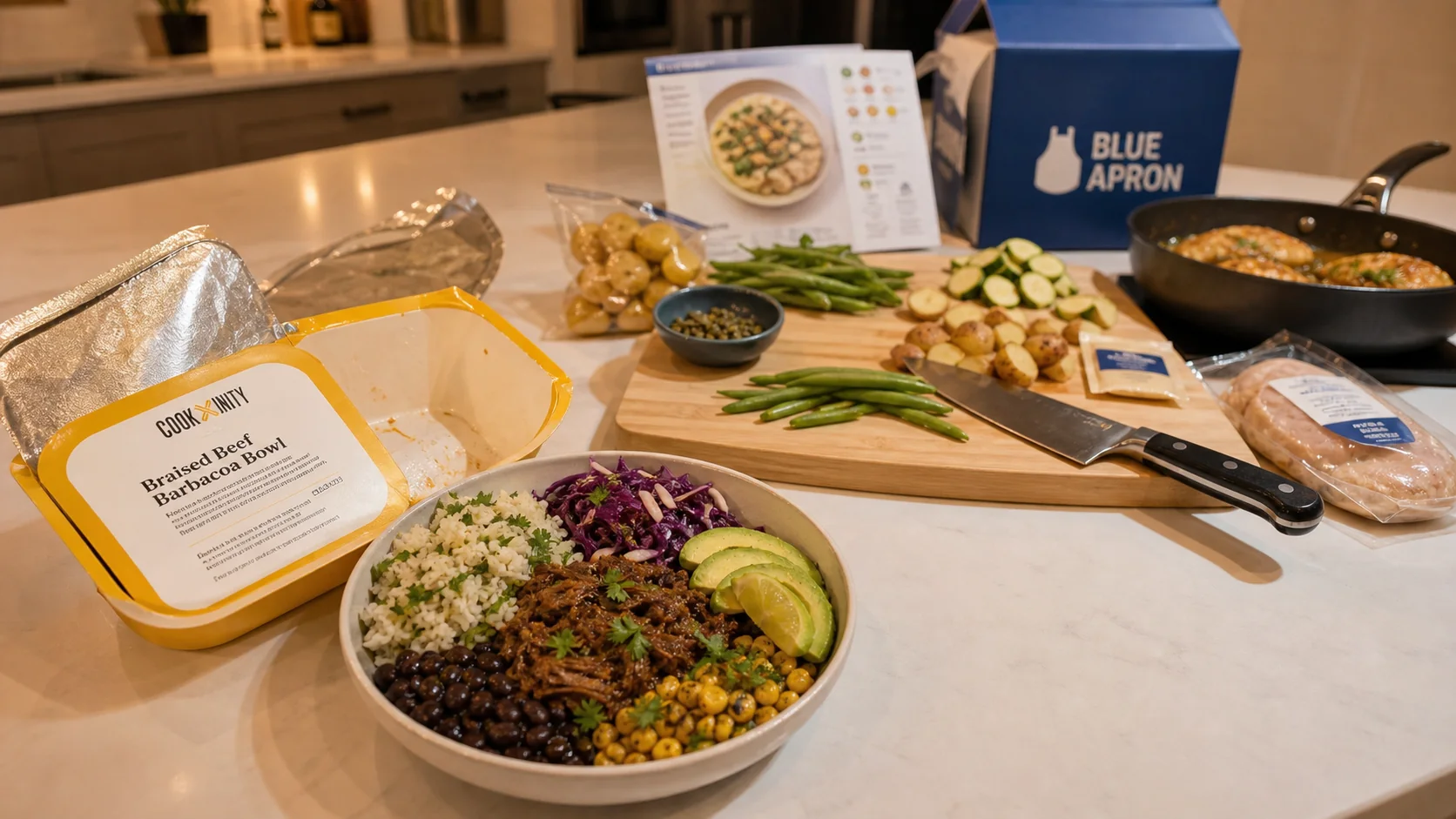
CookUnity and Blue Apron now overlap, but they are not identical services. CookUnity is centered on fresh, fully cooked, single-serving meals from named chefs. Blue Apron's current store spans classic meal kits, Assemble and Bake dishes, and Dish by Blue Apron prepared meals. It also allows customers to shop without a subscription. CookUnity is the focused prepared-meal specialist. Blue Apron is the flexible multi-format store.
CookUnity wins for shoppers who want ready-to-heat food to cover most lunches and dinners. Its larger chef marketplace offers greater depth within the prepared category. Blue Apron wins for households that want to cook on some nights, assemble a one-pan meal on others, and keep prepared dishes as a backup. The best choice depends on whether consistency or format flexibility matters more.
- CookUnity wins for a deep marketplace of chef-made individual prepared meals.
- Blue Apron wins for à la carte ordering and the ability to mix meal kits, one-pan dishes, and prepared meals.
- CookUnity advertises up to 400-plus meals, while Blue Apron advertises 100-plus choices across several formats.
- Dish by Blue Apron meals state at least 20 grams of protein and a good source of fiber, but every item still deserves a label check.
The short verdict
For premade meal delivery that keeps individual dishes ready in the refrigerator, choose CookUnity. The service offers plans from 4 to 16 meals per week and presents its current selection as up to 400-plus meals from 100 professional chefs. A Braised Beef Barbacoa bowl can arrive as a complete meal with rice, beans, corn, cabbage, and avocado.
Choose Blue Apron when you do not want one format to define the week. Its current store advertises more than 100 meals across meal kits, Assemble and Bake options, and prepared dishes. Blue Apron says a subscription is not required, so occasional shoppers can place an order without committing to a recurring prepared-meal plan.
Prepared-meal depth versus format breadth
CookUnity devotes its identity to finished meals. The chef profile, nutrition panel, package, heating instructions, and weekly plan all support one use case: heat an individual dish and eat. That focus produces more prepared choices and makes it easier for different household members to order separate cuisines.
Blue Apron spreads its catalog across several levels of effort. A classic meal kit provides ingredients and a recipe. Assemble and Bake reduces stovetop work. Dish by Blue Apron provides a ready-to-heat option. This variety is useful for a household whose schedule changes, but the headline menu count includes products that are not direct substitutes for CookUnity trays.
Taste, cooking, and control
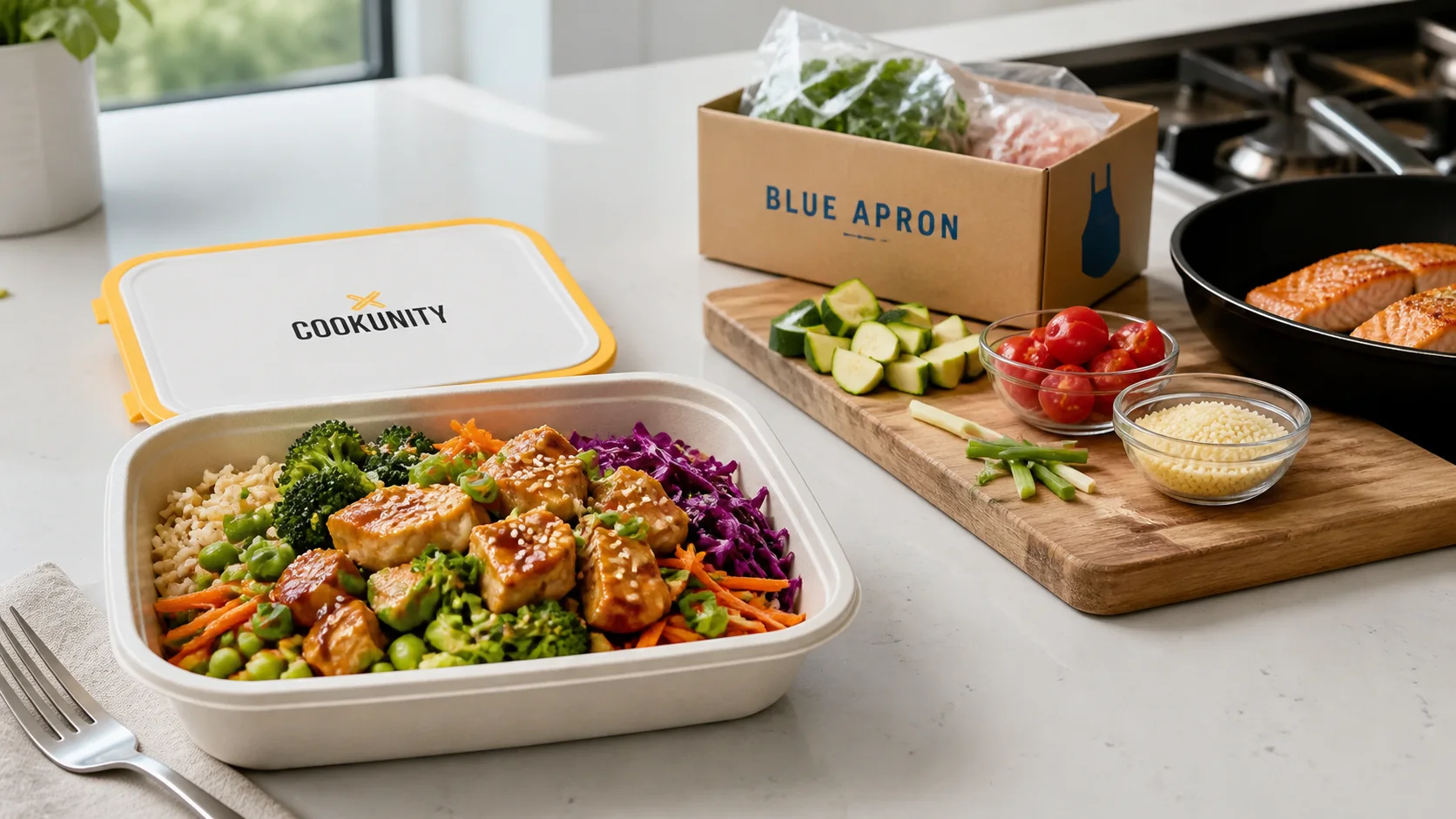
CookUnity is the better option when a chef-composed meal should be ready before a delivery app could arrive. The named-chef model supports many regional flavors and complete plates. Reheating can soften vegetables or meat, so customers should use an oven or skillet when instructions offer that option and keep cold toppings separate.
Blue Apron meal kits provide more control over texture. A Lemon-Caper Chicken recipe lets the cook determine browning, doneness, salt, and sauce. That control requires a cutting board, pan, active attention, and cleanup. Blue Apron's prepared dishes trade some of that control for speed, but the prepared selection is not as deep as CookUnity's core marketplace.
Protein, fiber, and complete plates
Blue Apron says each Dish prepared meal contains at least 20 grams of protein, is a good source of fiber, and contains no artificial flavors or colors. That creates a useful floor, though 20 grams may be below the target of some active adults. Meal kits show recipe nutrition and allow ingredients or portions to be adjusted during cooking.
CookUnity does not apply one protein or fiber promise to every chef's meal. Instead, shoppers can compare individual nutrition panels across a larger selection. Look for an obvious protein anchor plus vegetables, beans, or whole grains. A barbacoa bowl with beef, black beans, cabbage, corn, and rice gives more context than protein grams alone.
Subscription, price, and ordering freedom
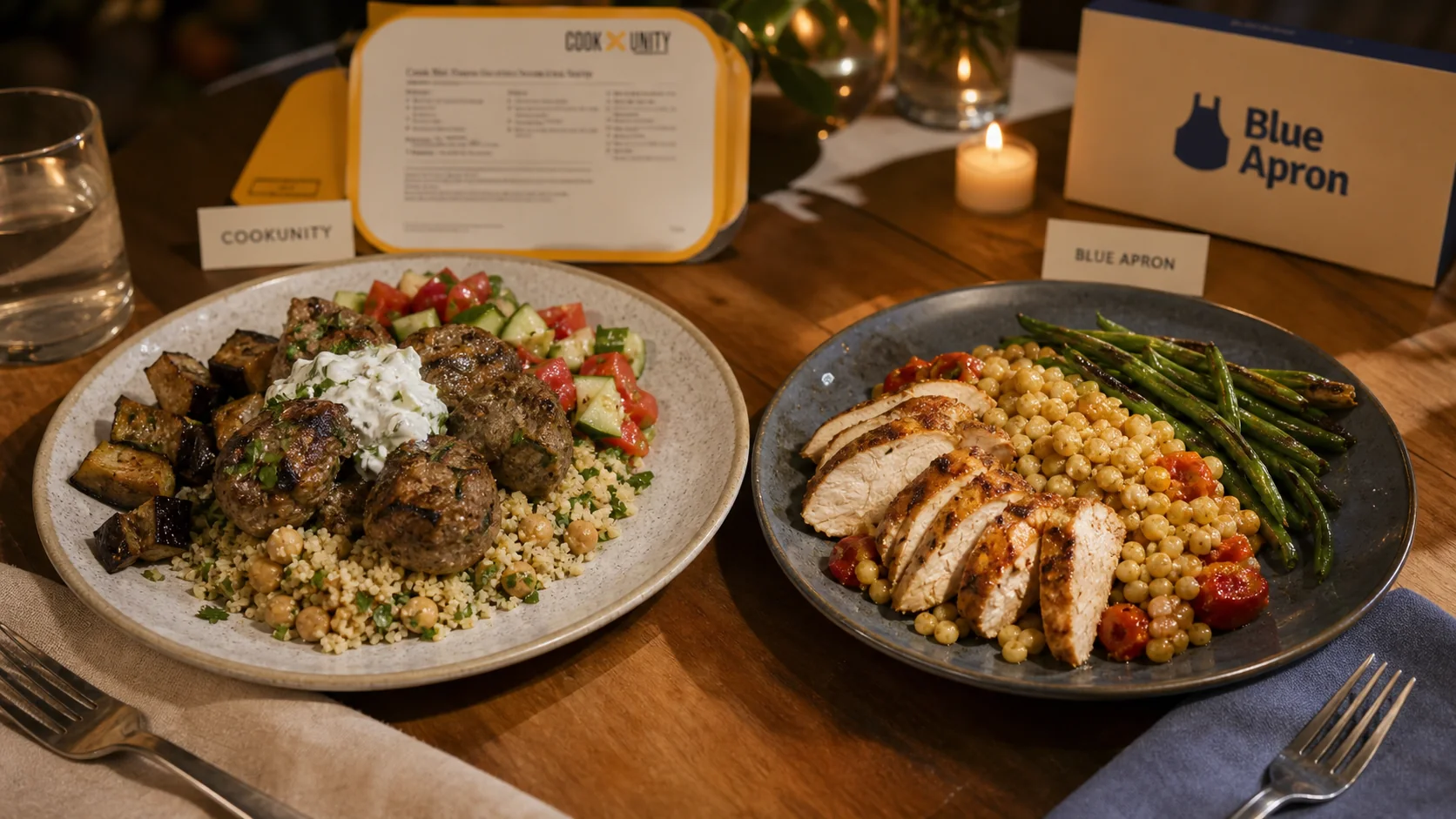
Blue Apron's no-subscription store is its clearest commercial advantage. A customer can order for a particular week without maintaining a recurring plan, and can mix products across formats. Optional membership or Subscribe and Save programs may change the economics, so compare the current terms rather than treating a promotional percentage as permanent.
CookUnity uses a weekly plan, which is convenient for routine lunches and dinners but requires attention to order cutoffs, skips, and pauses. Compare the same number of individual servings at the recurring delivered price. For meal kits, include the servings you will actually eat and the value of cooking time. For prepared meals, include any sides needed to make the portion satisfying.
Who should buy each service
CookUnity is best for solo diners, busy professionals, and households that primarily want restaurant-style prepared meals. Its large selection and chef identities make it easier to use the service repeatedly without giving every night the same nutritional-program feel.
Blue Apron is best for flexible households that want cooking projects, easier oven meals, and prepared backups in one store. It is also attractive to buyers who do not want a subscription. Final verdict: CookUnity wins for prepared-meal depth and convenience. Blue Apron wins for format choice and à la carte control.
COMMERCIAL FAQ
Questions before you buy
01Is CookUnity better than Blue Apron?+
CookUnity is better for a large, chef-driven selection of fully prepared single-serving meals. Blue Apron is better for customers who want to mix meal kits, Assemble and Bake dishes, and prepared meals or place an à la carte order without a subscription.
02Does Blue Apron sell prepared meals?+
Yes. Blue Apron's current store includes Dish by Blue Apron prepared meals alongside meal kits and Assemble and Bake options. Blue Apron says prepared dishes can be ready in as little as five minutes and meet stated protein and fiber criteria.
03Where can I buy CookUnity or Blue Apron meals?+
Order from each company's official website after checking delivery for your ZIP code. CookUnity uses weekly meal plans. Blue Apron currently allows no-subscription shopping. Confirm the current menu, shipping, recurring terms, cutoff date, and final delivered price.
04Which service is better for high-protein meals?+
CookUnity offers a larger prepared-meal selection and many high-protein dishes, but nutrition varies by recipe. Dish by Blue Apron states at least 20 grams of protein per meal. Compare the exact protein, fiber, calories, sodium, and serving size before purchasing.
05Which is better for one person?+
CookUnity is generally easier for one person who wants several fully cooked individual meals each week. Blue Apron can be better for a solo shopper who enjoys leftovers, wants occasional cooking projects, or prefers to place à la carte orders rather than maintain a weekly plan.
Sources
The Protein Meal Lab uses primary and authoritative sources. Service menus, prices, recipes, and delivery areas can change.